Learning complex subjects like Anatomy and Physiology (A&P) can often feel like trying to drink from a firehose. Between thousands of Latin-derived terms and intricate physiological pathways, students frequently watch their study hours climb while their comprehension slips.
Fortunately, seasoned educator Margaret Reece, PhD, has mapped out a strategic approach to study. Instead of relying on brute-force memorization, these 10 highly effective, science-backed learning strategies will help you master the material, and build a lasting foundation for your medical or healthcare career.
1. Treat Your Syllabus as Your Academic GPS
At the start of the semester, read your course syllabus thoroughly and keep it within easy reach . In accelerated or dense courses, the syllabus acts as a blueprint of what to read and when . It contains vital information that will clarify your weekly milestones and help you schedule your study time dynamically as the course progresses.
2. Schedule a Spaced-Repetition Study Plan
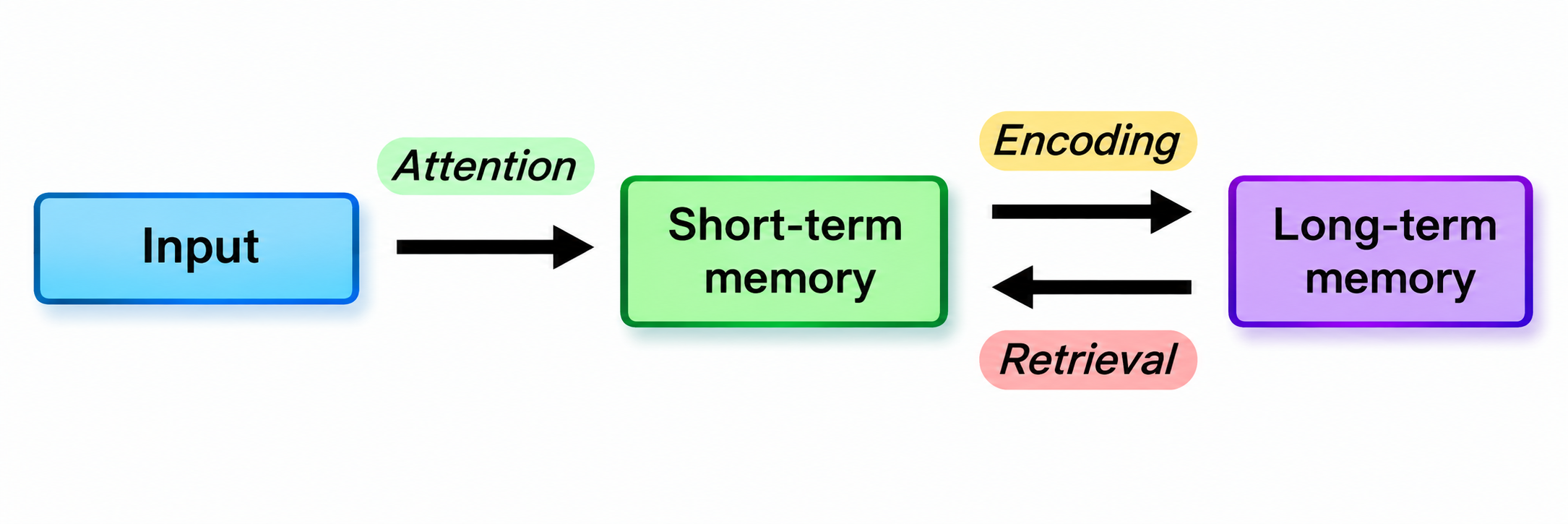
Cramming does not build long-term memory. Cognitive science shows that your brain must revisit new information repeatedly over time to store it securely . Since A&P material is delivered at an incredibly rapid pace, it’s easy to neglect earlier topics. To combat this, use a dedicated journal or calendar to schedule routine, spaced review sessions that keep previous concepts fresh.
3. Verify Your Lecture Notes with Your Instructor
Never wait until the exam to find out if your note-taking strategy is working. After your first couple of lectures, show your notes directly to your instructor and ask if you are capturing the key concepts. Listen carefully to their guidance—even if it differs from your own approach. Rephrase their feedback to confirm you’ve understood, and use this check-in to align your notes with what they actually plan to test.
4. Actively Challenge Your Preconceptions
We all live in a connected world and carry casual ideas about how the human body works. However, some of this ambient knowledge may be incomplete or completely inaccurate. When studying, cross-check your existing assumptions against your textbook rather than turning to generic search engines. Remember, you will be evaluated on the rigorous scientific concepts presented in your curriculum.
5. Master Spatial and Anatomical Orientation
Anatomy is fundamentally spatial. When learning the location and direction of body structures, prioritize terms of orientation (such as anterior, posterior, medial, and lateral) early on. Be especially careful not to project your own perspective: in anatomy, “right” and “left” always refer to the specimen’s right and left, not your own.
6. Practice Pronouncing Terms Out Loud
The human brain contains highly sophisticated auditory processing networks that excel at recognizing the pitch and meaning of the human voice. Don’t just read anatomical terms silently—say them out loud and listen to yourself pronouncing them correctly. If language barriers arise, utilize translation and text-to-speech tools to practice and reinforce these complex terms auditorily.
7. Decode Medical Language Using Word Roots
Medical terminology can seem like a foreign language, but scientists actually build long anatomical names by combining shorter Greek and Roman Latin root words. Instead of memorizing words in isolation, break them down. For instance, the suffix -cyte means “hollow vessel” or “cell”. Once you know this, terms like astrocytes (star-shaped cells), leukocytes (white blood cells), and osteocytes (bone cells) become instantly recognizable and logical.
8. Focus on Homeostasis Over Isolated Facts
Physiology is the science of how parts function, and memorizing isolated processes is a recipe for poor exam scores. Instead, look at the big picture: how do different organ systems work together to maintain a stable internal environment (homeostasis)? Train your brain to identify the Sensors that detect changes, the Responders that react, and the Feedback Loops that keep properties like blood volume, blood pressure, and pH in the optimal range.
9. Map Out Physiological Cause and Effect
Modern medical practice is built upon the foundation of cause and effect—understanding how disruptions lead to bodily responses. A “cause” is a force (such as an infection, trauma, or a heart attack) that pushes the body out of its normal homeostatic range. The “effect” is the cooperative response of multiple physiological feedback loops trying to neutralize that disruption to ensure survival. When studying, trace these chain reactions system-by-system rather than viewing them as isolated facts.
10. Understand Communication Across Compartments
Physiology is fundamentally about communication between different body compartments. Crucially, these compartments are often fluid-based and lack strict, physical boundaries. The two largest—the extracellular and intracellular fluid compartments—dictate much of the body’s chemistry. Focus on how chemical and electrical signals travel across these boundaries to coordinate organ functions, rather than expecting neat, room-like borders.
References
References
Goubar, T., Larach, J., Hindmarch, J., Bownes, S., & Sinha, S. (2021). A pragmatic approach to effective anatomy teaching and learning to medical students: A ten-year experience using evidence-based principles. MedEdPublish, 10(1). https://doi.org/10.15694/mep.2021.000147.1
Henry, B. M., Tomaszewski, K. A., & Walocha, J. A. (2016). Methods of evidence-based anatomy: A guide to conducting systematic reviews and meta-analysis of anatomical studies. Annals of Anatomy – Anatomischer Anzeiger, 205, 16–21. https://doi.org/10.1016/j.aanat.2015.12.002
Reece, M. P. (2013, September 5). 10 Tips for how to learn anatomy & physiology. Medical Science Navigator | Help for Anatomy and Physiology Students. https://www.medicalsciencenavigator.com/10-tips-for-how-to-learn-anatomy-physiology/
Waldman, S. D, & Campbell, R. S. D. (2010). Imaging of Pain. Saunders.