
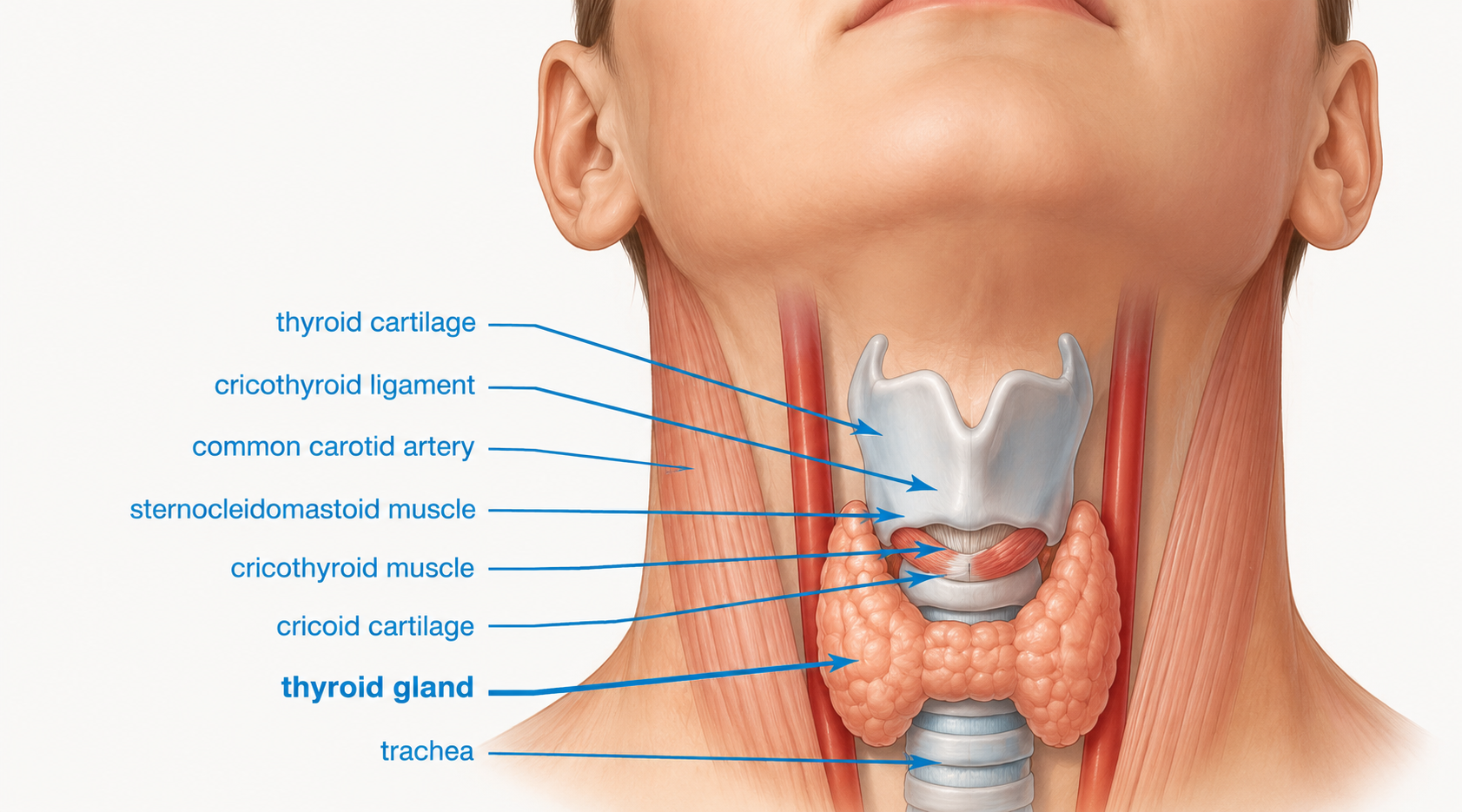
The thyroid gland is a highly vascularized, butterfly-shaped endocrine organ located in the front of the neck. It is essential for life and serves as the primary source of thyroid hormones—specifically thyroxine (T4) and triiodothyronine (T3). Because nearly every cell and tissue in the body contains specific receptors for thyroid hormones, the thyroid exerts a broad array of vital metabolic and physiological functions across virtually all organ systems.
Its primary physiological roles include:
- Regulation of Metabolism and Energy (Thermogenesis): The thyroid is critical for maintaining body homeostasis and energy balance. Thyroid hormones increase the basal metabolic rate and oxygen consumption. They also stimulate heat production (thermogenesis) by increasing the number and size of mitochondria and regulating oxidizing enzymes.
- Macronutrient Metabolism:
- Carbohydrates: At normal levels, thyroid hormones boost the effect of insulin, reinforce glycogen storage in the liver, and enhance glucose consumption.
- Proteins: Normal levels promote protein turnover and have an anabolic (protein-building) effect.
- Fats: Normal levels of T3 support the synthesis of lipids in the liver (lipogenesis) while simultaneously stimulating thermogenesis in brown adipose tissue8.
- Brain and Auditory Development: Thyroid hormones are crucial for fetal and early infant brain development, stimulating mental maturation, nerve tissue growth, and the formation of the myelin sheath around nerve cells. They are also required for auditory system development, specifically the differentiation and morphology of the cochlea.
- Physical Growth and Skeletal Maturation: Working in accuracy with growth hormone and insulin, thyroid hormones are essential for normal bodily growth, bone development, and skeletal maturation.
- Cardiovascular Function: Thyroid hormones regulate heart rate, myocardial contraction, and overall cardiac output. They do this by controlling the number of adrenaline (adrenergic) receptors in the heart, helping to regulate vasodilation, and enhancing blood flow to organs.
- Reproductive Function and Lactation: Normal reproductive functions, sexual maturation, and regular ovarian cycles depend heavily on normal thyroid hormone levels. It is needed prior to puberty to allow the sex glands to develop and afterward to support gamete production and regular menstrual cycles. Additionally, it supports normal lactation by aiding the hormone prolactin (PRL).
- Immune and Blood Regulation: Thyroid status can modulate immunological functions. It also directly stimulates the production and proliferation of red blood cell precursors (erythropoiesis).
- Calcium Regulation (Calcitonin): The thyroid gland also contains parafollicular cells, commonly called C cells. These cells act as part of the neuroendocrine system and secrete calcitonin, a hormone responsible for lowering calcium and phosphate levels in the blood.